
Are Studio Headphones for Gaming Actually Good?
If you’ve ever wondered whether those sleek, professional studio headphones could replace your trusty gaming headset, you’re not alone. With more gamers chasing perfect sound quality and streamers investing in cleaner audio setups, the question is popping up everywhere:
Are studio headphones for gaming actually good, or just overkill?
Let’s break it down.
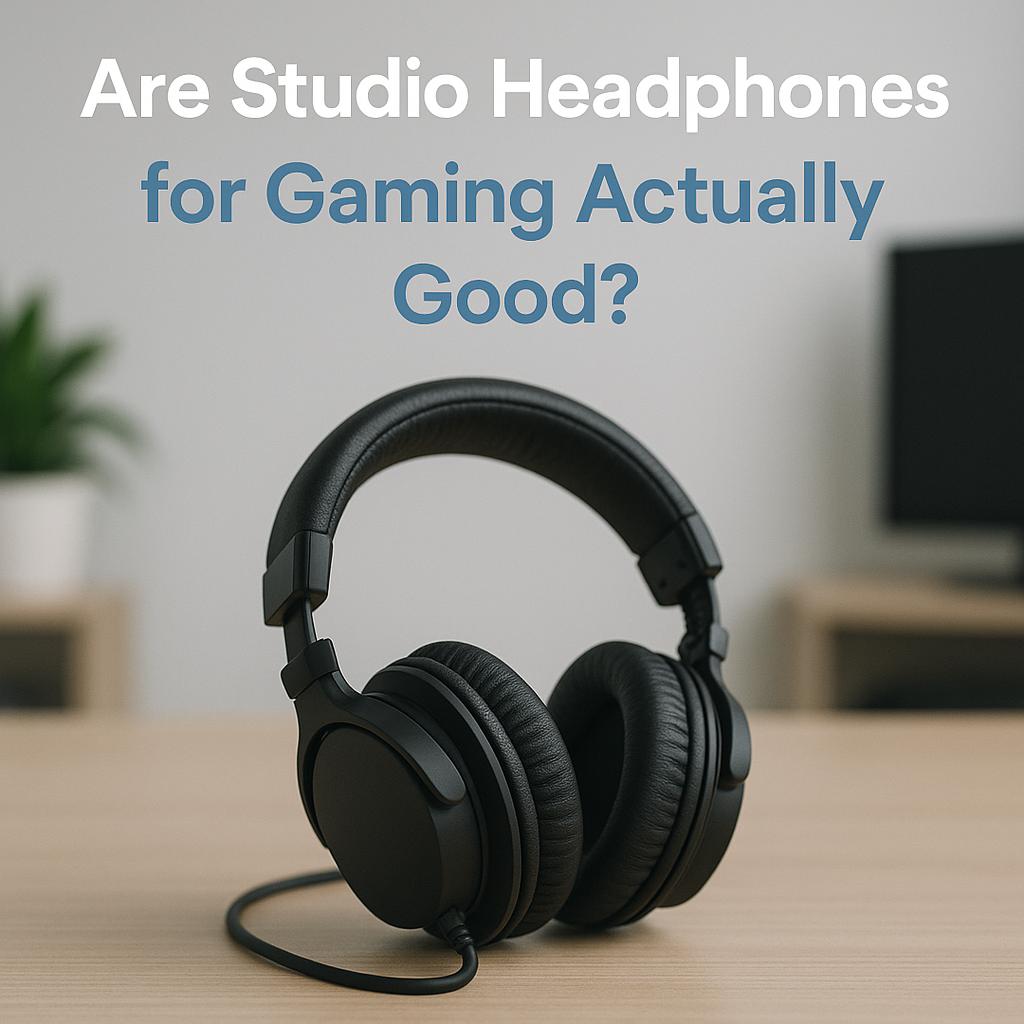
What Are Studio Headphones, Really?
Studio headphones are designed for audio accuracy, not gaming flair.
That means no RGB lighting, no surround-sound gimmicks, and no boosted bass designed to make explosions shake your skull.
Instead, what you get is flat, balanced sound, every footstep, reload, and voice line is heard exactly as it was recorded. That’s why they’re used by music producers, sound engineers, and streamers who want clean, precise sound for mixing and editing.
For more insight into the difference between studio and gaming sound signatures, check discussions on the Head-Fi Forum, the go-to place for audiophile breakdowns.

The Main Difference: Studio Headphones vs. Gaming Headsets
| Feature | Studio Headphones | Gaming Headsets |
|---|---|---|
| Sound Profile | Flat & neutral (accurate) | Bass-heavy, tuned for immersion |
| Microphone | Usually none (external mic required) | Built-in mic |
| Comfort | Depends on model, but often lighter | Often bulkier with cushions |
| Durability | High (built for long sessions in studios) | Varies; some focus more on looks |
| Price Range | $50 – $400+ | $30 – $300+ |
The key takeaway?
Studio headphones prioritize precision, while gaming headsets prioritize experience.
Want to see gamers debating this in real time? Check this r/Gaming discussion on Reddit, the opinions are split right down the middle.
Gaming Performance: How They Actually Sound In-Game
FPS Games (Valorant, CS2, Apex Legends)
In shooters, spatial awareness is everything. Studio headphones can shine because of their detailed soundstage, you’ll pick up subtle footsteps or distant gunfire with more clarity than a typical gaming headset.
However, since most studio cans are stereo only, they lack virtual surround sound. You can compensate with tools like Windows Sonic or Dolby Atmos.
RPGs & Story Games (Elden Ring, Cyberpunk 2077)
Here, immersion matters more than split-second reactions. Studio headphones deliver clean, realistic sound, letting you appreciate environmental effects and dialogue with insane detail.
Still, if you crave cinematic bass or that “subwoofer in your chair” feel, gaming headsets might win.
Check r/audiophile, there’s a whole thread comparing how open-back headphones change immersion in RPGs.
Streaming & Content Creation
If you stream or record content, this is where studio headphones absolutely dominate. They reproduce your voice and game mix accurately, making it easy to balance audio levels when editing.
That’s why many professional streamers (see setups on Linus Tech Tips Forum) use studio gear instead of RGB “gamer” headphones.
Microphones: The Big Trade-Off
Here’s the obvious trade-off, studio headphones don’t include mics.
You’ll need an external mic for Discord or streaming. Luckily, USB options like the Blue Yeti or Fifine K690 deliver amazing clarity for under $100.
If you want to explore community-tested mic pairings, check the Audio Setup Megathread on r/Twitch.
Soundstage & Positional Audio: Where Studio Headphones Win
The soundstage (how wide and realistic audio feels) is often better on studio headphones. Open-back models like the Sennheiser HD 600 or Beyerdynamic DT 990 Pro create a sense of space that makes games feel alive.
You’ll literally hear where players are moving, even if the game doesn’t support full surround.
By contrast, many gaming headsets simulate this artificially with software, and the results can be muddy or exaggerated.
Price-to-Performance: Are They Worth It?
At first glance, studio headphones can seem expensive, especially if you also buy an external mic. But long-term, they often save you money because they:
Last longer,
Offer better sound,
And can be used for more than just gaming (music, editing, streaming).
A $150 pair of studio headphones will easily outperform many $250 “gamer” headsets in clarity and detail.
If you’re serious about sound quality and versatility, they’re one of the smartest investments you can make.
Pros and Cons of Using Studio Headphones for Gaming
Pros
Flat and accurate sound reproduction
Great for competitive play (footsteps, positioning)
High build quality and durability
Excellent for music and content creation
Replaceable parts and cables
Works well with sound cards and DACs
Cons
No built-in microphone
Usually wired (less freedom of movement)
Requires sound tuning or software for surround effects
May sound “too flat” for casual players used to boosted bass
Ideal Setup: The Hybrid Solution
Many serious gamers and streamers go for a hybrid setup:
Studio headphones for sound quality
External mic (like the Fifine K690 or Blue Yeti) for voice
Audio interface or DAC for enhanced clarity
This gives you the best of both worlds:
professional-grade audio without sacrificing gaming performance.
It’s the setup used by many streamers because it looks clean, sounds amazing, and can scale as you grow your brand.
Why Gamers Are Switching to Studio Headphones
The gaming industry is maturing. Players are learning that flashy RGB doesn’t equal performance.
Sound accuracy is becoming as important as refresh rate or frame time.
And with games like Valorant, Counter-Strike 2, and Escape from Tarkov rewarding precise audio cues, more players are ditching “bass-boosted” gaming headsets for studio models that tell the truth.
This shift is similar to how pro players started moving from wireless to wired mice: reliability and accuracy > aesthetics.
Frequently Asked Questions
Do Studio Headphones need extra equipment?
Not necessarily. Most work fine plugged into a PC or console. But using a DAC or interface improves clarity and eliminates background hiss.
Are Studio Headphones better for FPS games?
Yes. Their flat tuning lets you detect direction and distance more naturally, giving you an audio advantage in shooters or tactical games.
Do open-back headphones leak sound?
They do. If you play in a noisy room, go for closed-back. But if you want immersion and space, open-back models sound more realistic.